South Dakota: Wind Cave National Park, Cluster State Park, Black Hills National Forest, Bear Butte State Park
- Length: 125 miles
- Duration: 7-8 days
- What’s Unique: The Centennial Trail in South Dakota offers a unique and unforgettable journey through diverse ecosystems, from serene prairie grasslands to rugged forested hills. This trail provides opportunities for solitude, adventure, and connection with nature. With its rich blend of natural beauty, historical significance, and sacred spiritual sites, it holds a special place among hiking destinations. The trail is less crowded than many others, allowing for abundant wildlife encounters and peaceful exploration.
- Difficulty: Moderate, lot of constant ups and downs, the elevation stays between 3100’ and 5900 feet.
- Season: Its accessibility in late spring or early summer makes it an excellent option for an early-season thru-hike.
- Special Note: Many of the lands you’ll be walking through are considered sacred. Please take the time to learn about the spiritual significance of these places by clicking here. Respect for the sacred lands you traverse adds depth and meaning to this extraordinary outdoor experience.
Permits
- Wind Cave National Park: A free backcountry permit is required if camping in Wind Cave National Park. However, this is the first or last 6 miles of the trail and camping here can easily be avoided.
- Custer State Park: Backcountry camping is limited to the French Creek Natural Area.
- Other: There are many developed campgrounds along the route. If you choose to stay in these campgrounds, you’ll need to pay a fee, popular camping areas may require advanced reservations.
Logistics
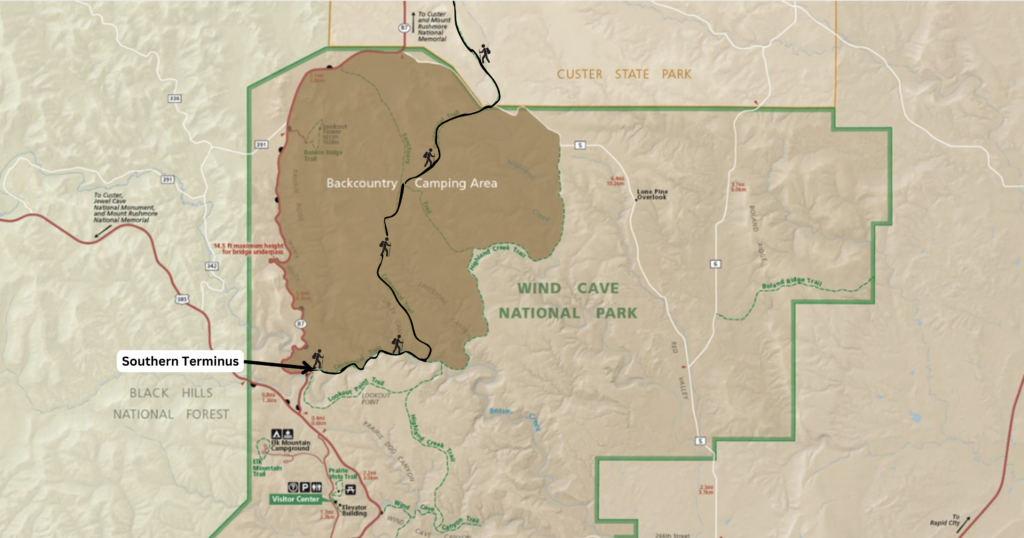
- Southern Terminus: Lookout Point Trailhead in Wind Cave National Park.
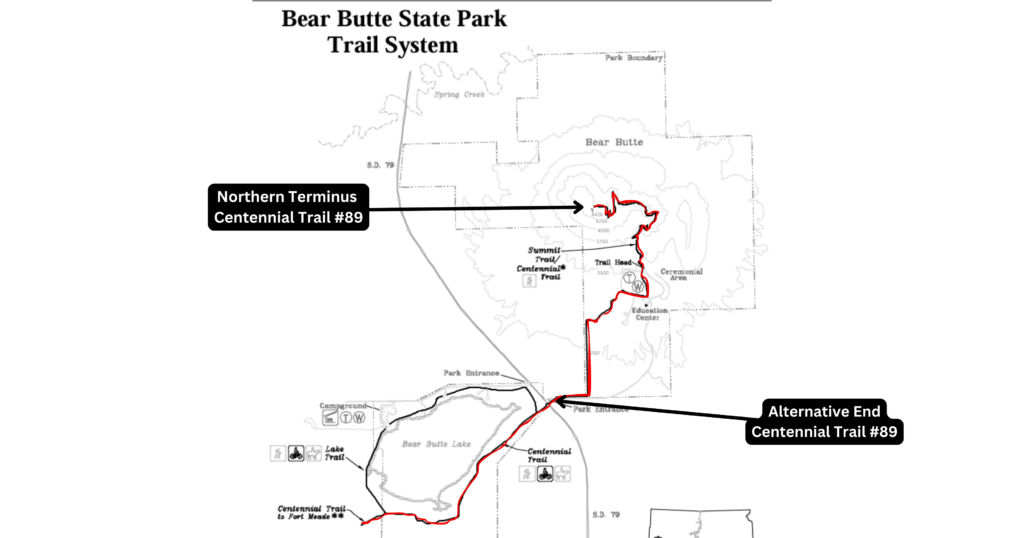
- Northern Terminus: Bear Butte Visitor Center in Bear Butte State Park.
- Getting there: The closest airport is Rapid City, South Dakota, which is within 60 miles of both the Northern and Southern terminuses.
- Parking: Convenient parking is available at key trailheads like Bear Butte State Park and Fort Meade Recreation Area. Notify rangers for overnight parking in designated areas.
Maps and Other Resources:
The Southern Terminus for the Centennial Trail is at the Lookout Point Trailhead, which is 2 miles from Wind Cave National Park Visitor Center. North bound hikers start in Wind Cave National Park. Backcountry camping is only allowed in the northwest area of Wind Cave National Park (area highlighted in brown). A free permit is required for backcountry camping in this area; permits are issued at the Wind Cave visitor center. For additional information on these permits, click here.
Please note that this area is the first 6 miles of the hike and camping can easily be avoided if you choose not to get a permit.
The Northern Terminus of the Centennial Trail is Bear Butte Summit, in Bear Butte State Park.
Bear Butte (Mato Paha), is a place of deep spiritual and cultural significance for many Native people, serving as an important site for prayer and ceremony. Designated as a State Park in 1961, the area has seen tensions between its sacred uses and recreational activities. Today, hikers are required to stay on designated trails to avoid disturbing sacred spaces, and ongoing development in the area remains a source of conflict. Before deciding to hike to the summit, take time to learn about the site’s cultural importance and consider whether your climb aligns with respecting its sacredness.
Resupply:
- Legion Lake Lodge, Custer State Park, restaurant and cabins.
- Whispering Pines Campground, 0.5 miles off trail, general store and pay showers.
- Merritt: 1 mile off trail, burger joint, the Sugar Shack.
- Nemo Mercantile, 1 mile off trail, convenience store snacks and beverages.
Other:
- Leave No Trace Ethics: Visitors are encouraged to practice Leave No Trace principles, including packing out trash and minimizing campfire use. Open fires are restricted to approved areas with provided fire grates.
Return to home.